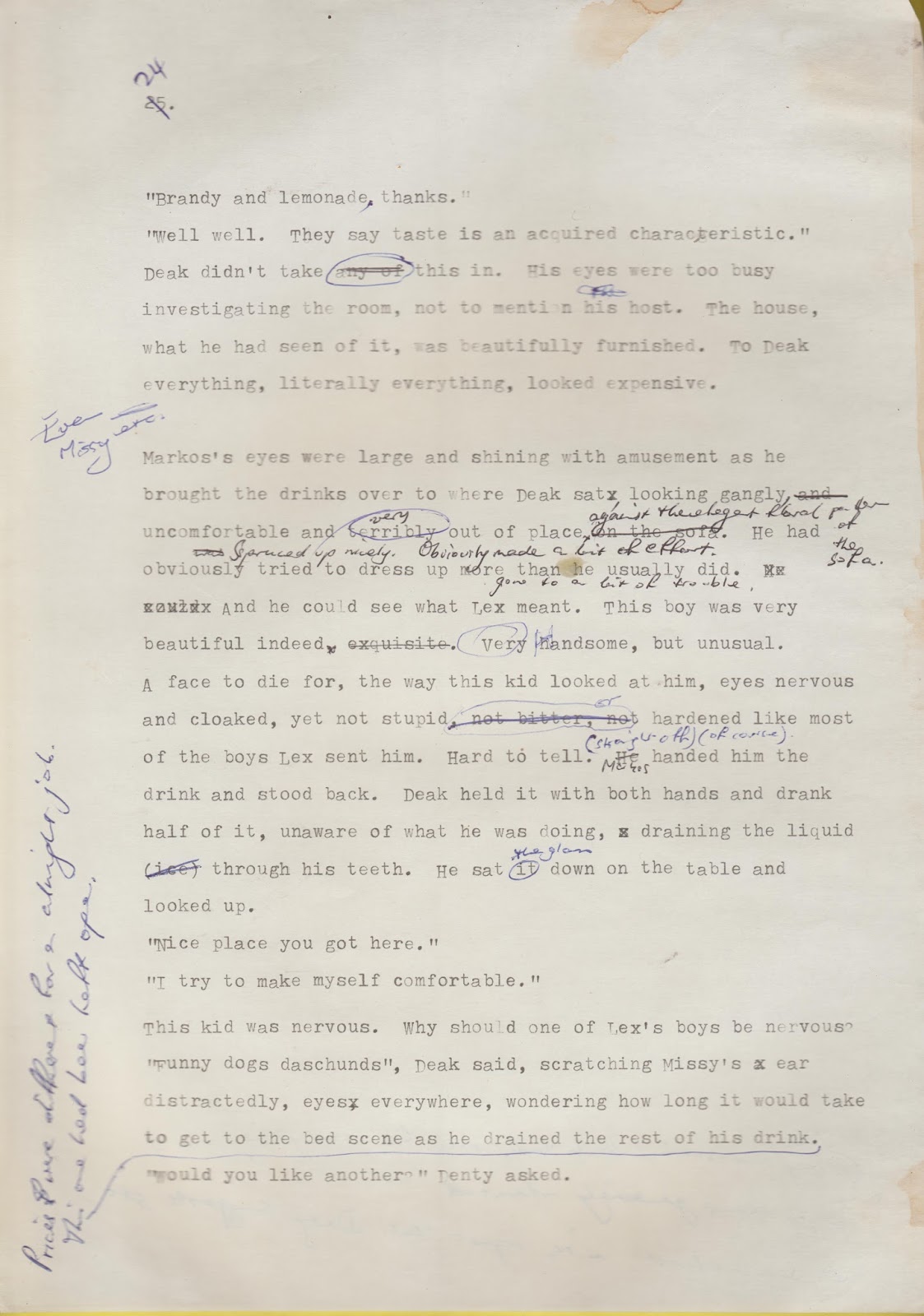
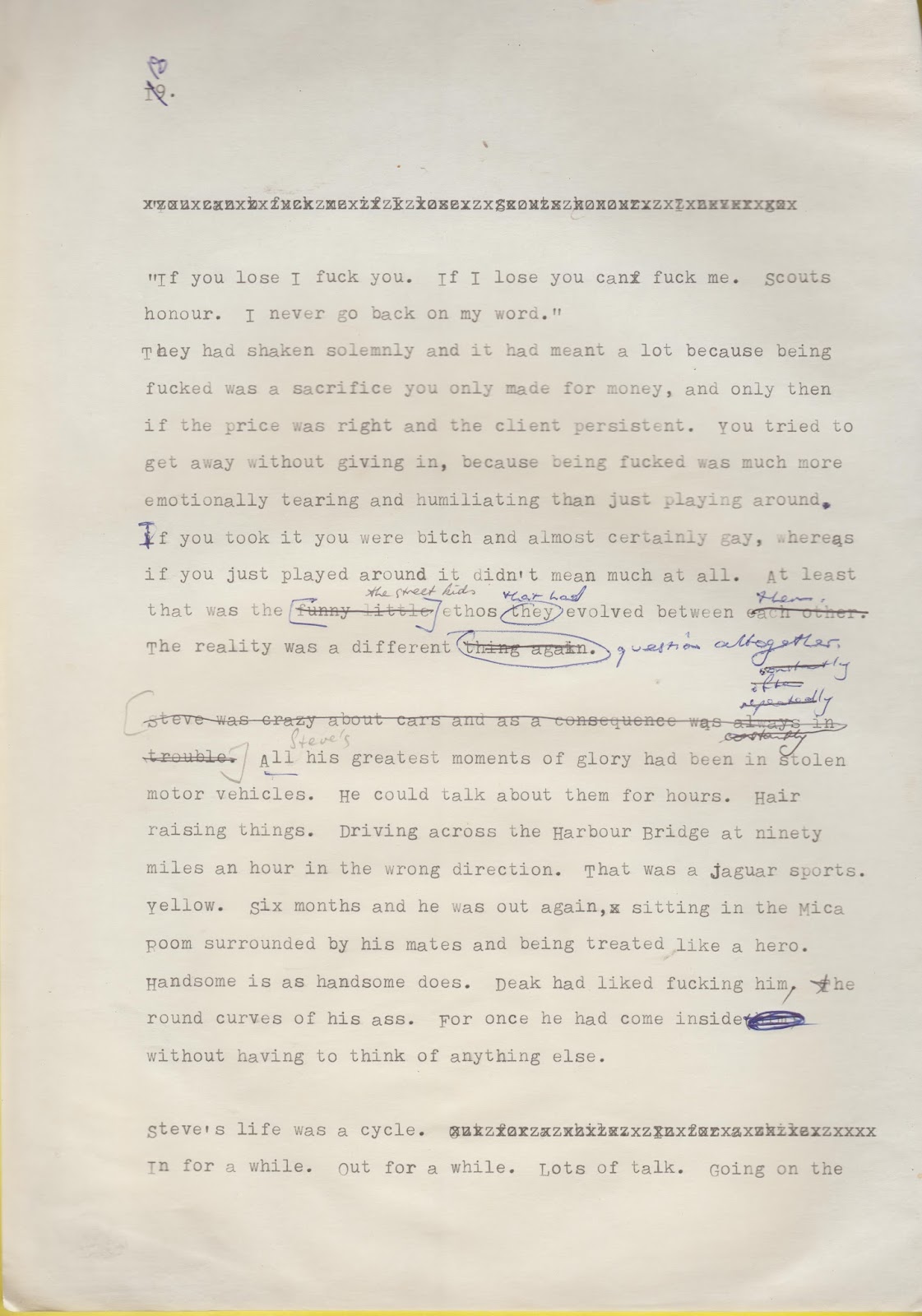
This is a collection of raw material dating back to the 1950s by journalist John Stapleton. It incorporates photographs, old diary notes, published stories of a more personal nature, unpublished manuscripts and the daily blogs which began in 2004 and have formed the source material for a number of books. Photographs by the author. For a full chronological order refer to or merge with the collection of his journalism found here: https://thejournalismofjohnstapleton.blogspot.com.au/
Search This Blog
Tuesday, 10 January 1984
Monday, 9 January 1984
Sunday, 8 January 1984
Saturday, 7 January 1984
Friday, 6 January 1984
Thursday, 5 January 1984
Wednesday, 4 January 1984
Tuesday, 3 January 1984
Monday, 2 January 1984
Centrally, generated., Background. Costello's, a retrospective story written decades after the initial events. Post Two.
Centrally, generated., Background. Costello's, a retrospective story written decades after the initial events.
Included in the first edition of Hunting the Famous but likely to be excluded from the second edition because of the sensitivity of the material and the potential for misinterpretation.
COSTELLO’S
I was just a crazed young man hanging around Sydney’s red light district
in the late sixties when the thread began.
I had a tendency to pass out drunk in the streets, to do almost anything
to change the way I felt. At 16 I was “rescued” from the city’s only drug
referral service for teenagers by a man called Harry Godolphin – a
strange character who always wore dark sunglasses and had a
fascination for street kids.
I was later to raise eyebrows at The Australian when I wrote a piece on
Costello’s, one of the late night bars where the goings on were receiving
considerable media condemnation during the Woods Royal Commission
which led to various reforms in child protection in NSW.
Basically it was a story about moral ambivalence.
The paper’s editors refused to run it but a reporter with some
understanding of the inner-city milieu used it as background material.
I might not write this piece in the same way now; but this is what I wrote
back then, and is pretty much exactly what happened.
It began:
“I remember Costello’s.
“It was a place where as kids we could go to get off the street, get warm,
get bought a drink, a feed, find somewhere to sleep for the night. For
many of us it wasn't the place of pedaristic evil that it is being daily
painted in the media and the Police Royal Commission.
“In the early 1970s Costello's was one of the only places in the Cross
where young people were welcome. While the evidence from some of
the witnesses before the Commission may suggest that they were
permanently psychologically damaged by what went on in the less public
realms upstairs, how much of this derives from the impact on already
disturbed adolescents of the stigma that was attached to homosexuality
in those days is a moot point.
“For a lot of us Costello's was one of the only places you could go to get
off the street, away from the cops and the wierdos. They didn't have
youth refuges in those days. There wasn't a queue of social workers
waiting to help us. No one wanted to know. Our parents certainly didn't.
“Going back home was never an option. And for many kids I'm sure it
isn't an option today. No – I don't support 12-year-old kids being sexually
abused. If there's one thing I hope to achieve in life it would be that my
own children have a happier less emotionally distressed youth than I
ever did. But let's get all this into some sort of perspective. Does anyone
seriously expect us to believe that you can't buy 14, 15 or 16 year olds in
Sydney in the 1990s? That to this day an endless stream of sexually
confused young men aren't coming in from often abusive homes in the
suburbs, seeking adventure, affection, somewhere to sleep. And that
most of them, like myself, go on to have careers, wives or lovers,
children.
“If I had to point to one thing that had scarred my life more than any
other, it wouldn't be the number of queens who admired my young
body.
“I remember, drunk as a skunk, standing at the top of William Street, and
out of all the miserable chaos of that night one phrase from a passer-by:
‘He should be at home with his mother.’”
“And around the same period, passing out literally in the gutter outside
Circular Quay, blind drunk again. Out of all the hundreds of office
workers bustling home to the North Shore, it was a gay man that picked
me up and washed the vomit off me, let me have a shower at his house,
gave me a change of clothes. It was gay men who encouraged me to
finish my schooling by correspondence. Who taught me to appreciate
music, books, the art of conversation. Who encouraged my first
stumbling efforts to write.
“Who, when I was homeless, sometimes for weeks on end, would give
me shelter, food, clothes. Who in later years helped me through
university when my own father wouldn't because only pinko communist
poofs went to university.
“Most of us came from pretty miserable home lives. We were utterly
starved of affection. But there was always a queue of queens ready to
take us home, buy us drinks, lavish us with attention, boasted about their
conquests afterwards. They were often kind, they were often lonely,
often alcoholic.
“A few I remember with affection to this day. People like old Hugh, a
retired doctor in his seventies, long dead now, who treated us all as if we
were his own children. He was too much of a gentleman to ever ask for
sex. ‘Oh no dear, you're all much too beautiful, I've already had one heart attack,’ he would say when
we offered. But he listened to our problems, cared about us, gave us
money and advice when we needed it.
“A lot of young men around the Cross were very saddened by his death.
For me, old Hugh was one of the first adult men who had ever actually
cared about me, who I was, what I was feeling; who I could go to for
help, who was proud of me for trying to complete my education.
“In the end, who was using who?
“At the back of Costello’s was the dance floor. At the front the main bar.
If you were in any way different or remotely adventurous in Sydney in
those days, sooner or later you would end up there. As someone who
was there, raking over the coals of what happened in that bar more than
20 years ago strikes me as very odd. For everyone who was tormented,
for whatever reasons, by their early sexual experiences, there are
probably dozens of others that owe their present lives to our so-called
predators, to the kindness of strangers.”
Back then, hanging around Harry Godolphin’s strategically located
terrace with spectacular views of Sydney, long since replaced by up-
market apartments, calmed me down.
Unlike the drug counselors of today, Harry gave me my first LSD trip and
took me to see the musical Hair. The Age of Aquarius had arrived in
Australia.
Harry Godolphin died of lung cancer in a Mullumbimby Hospital while I
was on a country trip for The Sydney Morning Herald. There was a time
when the petrol company Shell in conjunction with the Royal Agricultural
Society lavishly sponsored an annual tour of New South Wales, the
perfect way to spend two weeks out of the office.
At the time The Sydney Morning Herald was lapping up rural stories.
Some years I won a prize for the journalist who had published the most
stories during the trip.
The traveling troupe was near the Riverina town of Griffith in the
irrigation districts of southern NSW when I heard the news.
The nurses from Mullumbimby Hospital had been ringing, asking who
Harry was. They didn’t understand him, didn’t know who he was and
nobody in the area seemed to know much about him.
The nurses asked if he had any family. No, he didn’t, not that I was
aware.
Did he have any friends they could contact?
I didn’t have a clue who he did or did not know up that way.
For the next few hours after hearing the news I stared out the bus
window at the burnt beauty of the passing Australian landscape.
I did not know what to do, juggling in my head an old friendship with the
commitment to file stories for the paper on the lengthy tour.
I could have got off the bus then and there and made the thousand or so
mile trip to Mullumbimby to be at the funeral. I didn’t.
I was too busy being a big pooh-bah journalist and too worried about
what not filing a few bloody stories might do to my at last burgeoning
career.
It was an absence I felt guilty about for a long time.
Ever since then I’ve made a point of going to the funerals of those I know
who have died, convenient or not, and always encourage anyone having
doubts about pulling themselves through the trauma and inconvenience
of a funeral to do exactly the same.
Simply put, they are a mark of respect for lives that were. Funerals are
also a way of supporting distressed family members, a sign of sympathy
for often sad, bewildering and pointless deaths; a way of saying goodbye
to someone who was part of your life.
Included in the first edition of Hunting the Famous but likely to be excluded from the second edition because of the sensitivity of the material and the potential for misinterpretation.
COSTELLO’S
I was just a crazed young man hanging around Sydney’s red light district
in the late sixties when the thread began.
I had a tendency to pass out drunk in the streets, to do almost anything
to change the way I felt. At 16 I was “rescued” from the city’s only drug
referral service for teenagers by a man called Harry Godolphin – a
strange character who always wore dark sunglasses and had a
fascination for street kids.
I was later to raise eyebrows at The Australian when I wrote a piece on
Costello’s, one of the late night bars where the goings on were receiving
considerable media condemnation during the Woods Royal Commission
which led to various reforms in child protection in NSW.
Basically it was a story about moral ambivalence.
The paper’s editors refused to run it but a reporter with some
understanding of the inner-city milieu used it as background material.
I might not write this piece in the same way now; but this is what I wrote
back then, and is pretty much exactly what happened.
It began:
“I remember Costello’s.
“It was a place where as kids we could go to get off the street, get warm,
get bought a drink, a feed, find somewhere to sleep for the night. For
many of us it wasn't the place of pedaristic evil that it is being daily
painted in the media and the Police Royal Commission.
“In the early 1970s Costello's was one of the only places in the Cross
where young people were welcome. While the evidence from some of
the witnesses before the Commission may suggest that they were
permanently psychologically damaged by what went on in the less public
realms upstairs, how much of this derives from the impact on already
disturbed adolescents of the stigma that was attached to homosexuality
in those days is a moot point.
“For a lot of us Costello's was one of the only places you could go to get
off the street, away from the cops and the wierdos. They didn't have
youth refuges in those days. There wasn't a queue of social workers
waiting to help us. No one wanted to know. Our parents certainly didn't.
“Going back home was never an option. And for many kids I'm sure it
isn't an option today. No – I don't support 12-year-old kids being sexually
abused. If there's one thing I hope to achieve in life it would be that my
own children have a happier less emotionally distressed youth than I
ever did. But let's get all this into some sort of perspective. Does anyone
seriously expect us to believe that you can't buy 14, 15 or 16 year olds in
Sydney in the 1990s? That to this day an endless stream of sexually
confused young men aren't coming in from often abusive homes in the
suburbs, seeking adventure, affection, somewhere to sleep. And that
most of them, like myself, go on to have careers, wives or lovers,
children.
“If I had to point to one thing that had scarred my life more than any
other, it wouldn't be the number of queens who admired my young
body.
“I remember, drunk as a skunk, standing at the top of William Street, and
out of all the miserable chaos of that night one phrase from a passer-by:
‘He should be at home with his mother.’”
“And around the same period, passing out literally in the gutter outside
Circular Quay, blind drunk again. Out of all the hundreds of office
workers bustling home to the North Shore, it was a gay man that picked
me up and washed the vomit off me, let me have a shower at his house,
gave me a change of clothes. It was gay men who encouraged me to
finish my schooling by correspondence. Who taught me to appreciate
music, books, the art of conversation. Who encouraged my first
stumbling efforts to write.
“Who, when I was homeless, sometimes for weeks on end, would give
me shelter, food, clothes. Who in later years helped me through
university when my own father wouldn't because only pinko communist
poofs went to university.
“Most of us came from pretty miserable home lives. We were utterly
starved of affection. But there was always a queue of queens ready to
take us home, buy us drinks, lavish us with attention, boasted about their
conquests afterwards. They were often kind, they were often lonely,
often alcoholic.
“A few I remember with affection to this day. People like old Hugh, a
retired doctor in his seventies, long dead now, who treated us all as if we
were his own children. He was too much of a gentleman to ever ask for
sex. ‘Oh no dear, you're all much too beautiful, I've already had one heart attack,’ he would say when
we offered. But he listened to our problems, cared about us, gave us
money and advice when we needed it.
“A lot of young men around the Cross were very saddened by his death.
For me, old Hugh was one of the first adult men who had ever actually
cared about me, who I was, what I was feeling; who I could go to for
help, who was proud of me for trying to complete my education.
“In the end, who was using who?
“At the back of Costello’s was the dance floor. At the front the main bar.
If you were in any way different or remotely adventurous in Sydney in
those days, sooner or later you would end up there. As someone who
was there, raking over the coals of what happened in that bar more than
20 years ago strikes me as very odd. For everyone who was tormented,
for whatever reasons, by their early sexual experiences, there are
probably dozens of others that owe their present lives to our so-called
predators, to the kindness of strangers.”
Back then, hanging around Harry Godolphin’s strategically located
terrace with spectacular views of Sydney, long since replaced by up-
market apartments, calmed me down.
Unlike the drug counselors of today, Harry gave me my first LSD trip and
took me to see the musical Hair. The Age of Aquarius had arrived in
Australia.
Harry Godolphin died of lung cancer in a Mullumbimby Hospital while I
was on a country trip for The Sydney Morning Herald. There was a time
when the petrol company Shell in conjunction with the Royal Agricultural
Society lavishly sponsored an annual tour of New South Wales, the
perfect way to spend two weeks out of the office.
At the time The Sydney Morning Herald was lapping up rural stories.
Some years I won a prize for the journalist who had published the most
stories during the trip.
The traveling troupe was near the Riverina town of Griffith in the
irrigation districts of southern NSW when I heard the news.
The nurses from Mullumbimby Hospital had been ringing, asking who
Harry was. They didn’t understand him, didn’t know who he was and
nobody in the area seemed to know much about him.
The nurses asked if he had any family. No, he didn’t, not that I was
aware.
Did he have any friends they could contact?
I didn’t have a clue who he did or did not know up that way.
For the next few hours after hearing the news I stared out the bus
window at the burnt beauty of the passing Australian landscape.
I did not know what to do, juggling in my head an old friendship with the
commitment to file stories for the paper on the lengthy tour.
I could have got off the bus then and there and made the thousand or so
mile trip to Mullumbimby to be at the funeral. I didn’t.
I was too busy being a big pooh-bah journalist and too worried about
what not filing a few bloody stories might do to my at last burgeoning
career.
It was an absence I felt guilty about for a long time.
Ever since then I’ve made a point of going to the funerals of those I know
who have died, convenient or not, and always encourage anyone having
doubts about pulling themselves through the trauma and inconvenience
of a funeral to do exactly the same.
Simply put, they are a mark of respect for lives that were. Funerals are
also a way of supporting distressed family members, a sign of sympathy
for often sad, bewildering and pointless deaths; a way of saying goodbye
to someone who was part of your life.
Sunday, 1 January 1984
Centrally Generated, Background, Wood Royal Commission, Draft, unpublished, written Circa 1984. Post One.
Centrally Generated, Draft, unpublished, written Circa 1973.
Includes descriptions of a Kings Cross nightclub, Costello's, and the various characters of the area in the late 1960s.
The club, in particular, featured heavily in the Wood Royal Commission into Police Corruption.
This is the background to the Commission, a very good summary courtesy of Wikipedia:
https://en.wikipedia.org/wiki/Royal_Commission_into_the_New_South_Wales_Police_Service.
The Royal Commission into the New South Wales Police Service (Wood Royal Commission) was held in the State of New South Wales, Australiabetween 1995 and 1997. The Royal Commissioner was Justice James Roland Wood. The terms of reference were to determine the existence and extent of corruption within the New South Wales Police; specifically, it sought to determine whether corruption and misconduct were "systemic and entrenched" within the service, and to advise on the process to address such a problem.
Includes descriptions of a Kings Cross nightclub, Costello's, and the various characters of the area in the late 1960s.
The club, in particular, featured heavily in the Wood Royal Commission into Police Corruption.
This is the background to the Commission, a very good summary courtesy of Wikipedia:
https://en.wikipedia.org/wiki/Royal_Commission_into_the_New_South_Wales_Police_Service.
The Royal Commission into the New South Wales Police Service (Wood Royal Commission) was held in the State of New South Wales, Australiabetween 1995 and 1997. The Royal Commissioner was Justice James Roland Wood. The terms of reference were to determine the existence and extent of corruption within the New South Wales Police; specifically, it sought to determine whether corruption and misconduct were "systemic and entrenched" within the service, and to advise on the process to address such a problem.
In 1995, the Commission received letters patent widening the terms of reference to include investigating the activities of organised paedophile networks in New South Wales, the suitability of care arrangements for at-risk minors and the effectiveness of police guidelines for the investigation of sex-offences against minors.
The Commission was granted considerable powers, even by the standards of a Royal Commission; in addition to the usual power to compel attendance, the giving of evidence and the production of documents and self-certification of warrants for electronic surveillance, bugs and telephone intercepts. Commission officers were permitted to carry firearms and were conferred the powers of a constable of the NSW Police Service. Most notably, lying to or misleading the Commission was an offence carrying a sentence of up to 6 months imprisonment.
In contrast to the usual structure of Royal Commissions, which are staffed primarily by lawyers and administrators, the commission had three investigation teams composed of lawyers, accountants, investigators and current and former officers from every Australian and common-law jurisdiction excepting New South Wales. The commission also acquired the equipment and expertise so that it possessed the sophisticated covert surveillance capabilities it would need to effectively monitor the activities of groups of corrupt police officers and organised criminals.
By 1995, the Commission had uncovered hundreds of instances of bribery, money laundering, drug trafficking, fabrication of evidence, destruction of evidence, fraud and serious assaults in just the detective division of the Kings Cross patrol. Participation in misconduct was universal in the detective division of the Kings Cross patrol, and the senior levels of the branch had detective sergeants and the chief detective in a permanent corrupt relationship with major drug traffickers and the local criminal milieu. The Kings Cross detectives received payments akin to a "rent" from individuals like Bill Bayeh, Stave Hardas and "Fat" George; the payments totalled thousands of dollars per week, collected by Sergeant Trevor Haken and shared amongst the six detective sergeants and the chief detective (Chook Fowler). This corrupt practice was known in police circles as "the laugh".
In 1994, Trevor Haken was summonsed for an examination at the New South Wales Crime Commission. They had become aware of his relationship with drug traffickers and his corrupt practices. The Wood Royal Commission had assessed Haken as being the individual most likely to co-operate with the Commission in a covert capacity, and took the opportunity to put to Haken an offer to work with the Commission. He agreed and he was instructed by the Commission to simply carry on as normal; his car was fitted out with bugs to record video and audio and his phones were permanently tapped. Over the following 6 months, Haken continued to collect payments from traffickers, distribute them to the other corrupt detectives and collected an enormous amount of intelligence and data for the Commission.
In 1995, the Commission scheduled a hearing about the Kings Cross patrol. It summonsed the detective sergeants and Chook Fowler and asked them whether they had ever accepted or asked for a bribe. They emphatically denied they had. Having these denials on the record, the Commission then played video footage and audio recordings from the bugs in Trevor Haken's car. The recordings showed very clearly the handing over of large amounts of cash and discussion of bribes and corrupt activities. Following this bombshell hearing, resistance to the work of the commission from the police service and media crumbled and they were inundated with calls from serving officers seeking to determine whether they could make a deal.
The next day, Commissioner Wood declared a conditional amnesty for disclosures of corruption or misconduct by serving officers. The Commissioner emphasised that the goal of the inquiry was to ascertain the prevalence and nature of corruption in the NSW police and advise on the reforms necessary to address the problem. Removing corrupt officers who would simultaneously provide a full account of their conduct and end their ability to engage in further corrupt practices. It would allow the NSW Police to obtain a large amount of information that would not otherwise come out in criminal proceedings, and it would serve as a clean break for the NSW Police Service.
In addition to the Kings Cross hearings, hundreds of police officers were compelled to resign as evidence of wrongdoing and misconduct was brought to light. Specialist officers from the Fraud Enforcement Agency, Northwest Regional Crime Squad and Drug Squad were implicated in particularly serious abuses and criminality. A large number of generalist, uniform officers also left the service due to the disclosure of misconduct.
Paedophilia/pederasty enquiry
In 1995, the Independent Commission Against Corruption referred a matter to the Commission regarding the possibility of collusion between organised paedophile networks with members from the legal profession, media and political establishment, and the senior ranks of the NSW Police Service and judiciary. For the purposes of this article, and in the Commission Report Volume 4, the term paedophile is used as an umbrella for sexual offences and behaviours that include paedophilia, pederasty and hebephilia.
The allegation of the existence of this conspiracy was made by Colin Fisk, a convicted sex offender and member of such a network; the background to this allegation was his arrest, along with Detective Larry Churchill, for child pornography and drug offences. Fisk alleged the existence of a vast network of prominent individuals from the legal profession, media, political establishment and medical profession who were paedophiles/pederasts and were colluding with senior ranks of the police service to protect its members from prosecution.
In pursuing this term of reference, the commission investigated the activities of the particular pederastic/hebephilic network of which Fisk was a member, and its relationship with a group of corrupt NSW Police Service detectives. The network operated as a mutual syndicate and was designed to facilitate the distribution of child pornography, the procuring and sharing of underage sexual partners by members, investment in property such as an underage male brothel in Surry Hills and a pooling of resources and information for the purposes of evading law enforcement and maintaining access to illicit markets. Syndicate members also carried on an amphetamine-trafficking enterprise to raise money to help with the significant expense imposed by the requirement to pay bribes, and the high price of illicit materials and services.
The relationship between the network and the group of corrupt detectives was extensive and multifaceted, including regular bribe payments to the detectives in exchange for advance warning of law enforcement scrutiny, consignment of large amounts of methamphetamine to the network members on a profit-sharing bases and the planning of insurance frauds and financial crimes. The detective closest to the network, Larry Churchill, also shared some of the hebephilic tendencies of the network members.
The Commission found that the syndicates were effective and efficient in protecting the perpetrators from law enforcement scrutiny and facilitating their criminal activities, and there had been a corrupt relationship between the Fisk syndicate and a group of corrupt officers led by Larry Churchill. The inquiry also conceded that there were probably other such networks and corrupt dealings unknown to them but based on the extensive evidence provided by large numbers of sex-offenders, victims and law enforcement officers, it felt able to put that aside and concentrate on its instruction to examine police procedure and care arrangements for minors.
It was highly critical of police, prosecutors and public servants in their approach to the prosecution of sex offences against minors and their lack of specialist police resources and clear guidelines. The Commission made comprehensive recommendations for the reform of care arrangements and police and public service procedures in dealing with child victims of sexual offences.
However, the inquiry debunked the most sensational allegations made by Fisk and was emphatic that there was no compelling evidence for the existence of a large network of prominent professionals with paedophile tendencies and a criminal bargain with senior officers of the police service to protect them from prosecution.
Subscribe to:
Posts (Atom)